The Five Step Test
Somehow that little mewling Little to whom you gave birth only yesterday has grown and grown, and now you’re wondering if it’s time to do away with the booster all together.
A 2015 article by a major independent testing company made the recommendation to move from a rear facing only infant car seat to a rear facing convertible or multimode car seat sooner rather than later. Since a majority of newborns come home in a rear facing only car seat and then switch to a convertible
Parents want to keep their kids safe, and as CPSTs it’s our job to help them do just that. Parents often ask us to point them to the safest seat on the market. There’s no simple answer to that question: the safest seat is the one that fits your child, fits your car, and that you use correctly every time. Age, height, and weight all matter when choosing a seat that fits your little. Research shows that children under age 2, no matter their size, should be in rear facing seats, and older children need boosters until they pass the 5 step test.
Both of these warnings are so ubiquitous that maybe you haven’t stopped to read them (or, maybe, your kids are so loud and busy that you haven’t had the chance). These federally mandated warnings say the same thing: the vehicle’s back seat is the safest place for children under age 13 to ride. Sometimes, this warning reads “12 and under”, but the recommendation remains the same: kids should ride in the back seat if at all possible before they turn 13.
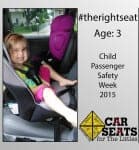
This year’s Child Passenger Safety Week is focusing on #therightseat. What is the right seat for your child? That’s not an easy question, but it’s an important one: injuries in motor vehicles are a leading cause of death in American children. According to the CDC, when properly used, #therightseat for your child reduces his or her risk of injury and death in a car crash by 50-71%.
If you’ve spent any time on our Facebook group, you might know that we’re big fans of the Safety 1st Advance EX 65 Air + convertible car seat. Why? It has a 50 pound rear facing weight limit, making it the most reasonably priced convertible seat with a weight limit that high.
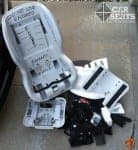
It happens. For whatever reason, you car seat cannot be used again. It might have expired, been involved in a recall that requires its destruction, or has been crashed. So now what to do with this hunk of plastic, fabric, and nylon that once protected a child?
When we are handed our mewling bundles for the first time, we are told to support their heads and keep their heads back. They have no head control forward or backward, so support their head. Support their head. Keep their head back, but support their head.
After that is drilled into us, it’s no wonder we have parents buying new car seats or rearranging everything to do away with head slump.
For many years, a locking clip was used to lock all lap and shoulder belts when installing a car seat. This was the only available method for locking the belt. Today, there are a number of other options available.
When it comes to child passenger safety, the evolution of caregiver knowledge and state laws has been a slow process. However, more and more caregivers are learning that children need to ride in booster seats longer than they may have originally thought.