Why Rear Facing: the Science Junkie’s Guide

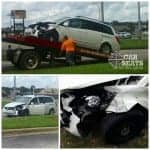
If you’re looking for just the facts about rear facing versus forward facing, you’ve come to the right place. There are multiple factors involved in this discussion; the unique physiology of a young toddler combined with the type of force in the most severe crashes adds up to the perfect storm that puts kids at significant risk if they are forward facing too early.

Read More...

Booster seat shoulder belt positioning clip? What’s that?

Ever wonder what that funny looking strap and plastic piece are that comes with your booster? It is called a shoulder belt positioning clip and is used to keep the shoulder belt at the correct position when using a backless booster. The fabric loop attaches to the bottom of the booster and the red clip attaches to the shoulder belt above the shoulder. Make sure to read your car seat manual to find out exactly where to attach it and when to use it!

Read More...

Rear Facing Car Seat Myths Busted

It’s hopefully common knowledge now that rear facing in the car is the safest way for toddlers to ride. As a child passenger safety technician, I’ve heard all the reasons that parents choose to forward face too early, and I’d like to provide some answers to those questions here. Hopefully, this guide will help keep your child rear facing as long as possible!

Read More...

Boosters Are For (Very) Big Kids

Fortunately, we know that the law is not enough to keep children safe. NHTSA, Safe Kids, and the American Academy of Pediatrics all recommend that children between 8 and 12 years old continue to use a booster until they fit the belt correctly alone, usually around 4’9″.

Read More...

Is your child’s car seat outgrown?

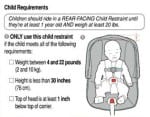
Wonder when your Little’s car seat is outgrown? Refer to your manual to check the limits for your child’s weight and height, and rules about how the child fits in the seat! Many rear facing car seats require 1″ of shell above the head – a 1″ tall book is a great easy way to measure!

Read More...

Non-Approved Products for Car Seats

As a general rule, products sold separately from your child restraint should not be used because these products may affect the safety of your restraint in a crash. Even a seemingly minor change to your restraint could alter the way is designed and tested to perform in a crash, resulting in serious injury or death.

Read More...